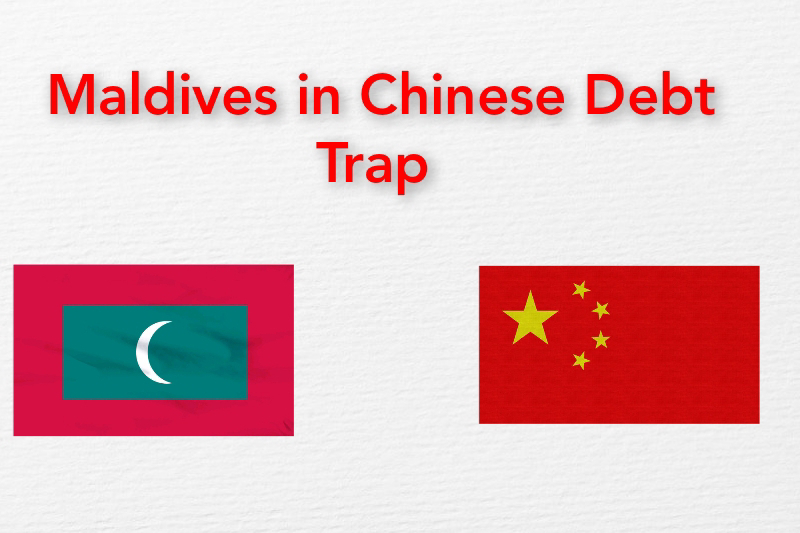
Idyllic yet increasingly burdened, the Maldives grapples with a growing mountain of debt owed to China. This essay delves into the archipelago nation's precarious financial situation, exploring the potential for economic devastation and the chilling threat to its autonomy. We will also analyze the government's justification for its borrowing strategy and the dire warnings issued by critics and international bodies.
A. The Maldives' Debt Burden and Economic Vulnerability
The Maldives relies heavily on tourism, making its economy susceptible to external shocks. To develop infrastructure projects and bolster its economy, the government sought loans from China. However, this has resulted in a significant debt burden. According to the IMF, the Maldives owes China over 42% of its total external debt, a staggering figure for a small nation. This high debt-to-GDP ratio raises concerns about the Maldives' ability to repay its loans, potentially leading to an economic collapse.
B. Sovereignty Concerns and Strategic Ramifications
Critics warn that the Maldives' debt situation could push the country into a "debt trap." China's lending practices are sometimes criticized for being opaque and having high-interest rates. If the Maldives defaults on its loans, China could potentially seize strategic assets like ports or islands, compromising the country's sovereignty. This situation resonates with Sri Lanka, which, due to mounting Chinese debt, had to lease Hambantota Port to a Chinese firm. The Maldives' location in the Indian Ocean, a vital trade route, further amplifies these strategic concerns. China's growing influence in the region could be seen as a challenge to India's security interests.
C. Government Defense and Diversifying Partnerships
The Maldivian government defends its relationship with China, highlighting the crucial infrastructure projects funded by Chinese loans. They argue that these projects are vital for the country's development. The government also emphasizes its efforts to diversify its partnerships and secure funding from other sources, including India and international organizations.
D. Critic's Warnings and the IMF's Assessment
Critics warn that the government's defense is shortsighted. They argue that the Maldives is prioritizing short-term gains through Chinese loans at the cost of long-term economic and strategic risks. The IMF has also raised concerns, stating that the Maldives' debt-carrying capacity is weak and the country faces a high risk of external debt distress. The IMF recommends fiscal consolidation and exploring debt restructuring options.
E. Turkish Drones: Diversification or Desperation?
In a surprising move, the Maldives recently purchased military drones from Turkey for $37 million. This action can be interpreted in two ways. Firstly, it could be seen as a strategic diversification away from complete reliance on India for security needs. Historically, India has provided security assistance to the Maldives, but recent political tensions have strained the relationship.
However, another interpretation is that the drone purchase is a desperate attempt to assert sovereignty in the face of the Chinese debt burden. The drones, though not as sophisticated as what India could offer, might be seen as a way to project some level of independence.
Conclusion
The Maldives stands at a crossroads. While Chinese loans have undeniably fueled infrastructure development, the nation's growing debt burden raises serious concerns about economic stability and potential threats to its sovereignty. The government must carefully navigate this complex situation, exploring alternative funding sources and implementing responsible debt management practices. Heeding the warnings of the IMF and learning from other nations' experiences is crucial to ensure the Maldives' long-term economic and political well-being.



Comments
Post a Comment