Posts

Showing posts with the label naval

Operation Silent Horizon

Image
Modern conflict is no longer defined solely by boots on the ground or aircraft roaring across visible skies. It is increasingly shaped by algorithms, data streams, and autonomous systems that observe, decide, and act in fractions of a second. Operation Silent Horizon represents this transformation — a mission where artificial intelligence, multi-sensor fusion, and precision electromagnetic weaponry converged to execute a near-invisible strike in a mountainous conflict zone. Conducted at 02:10 hours under conditions of low visibility and high strategic tension, the operation demonstrated how technological superiority can compress the timeline between detection and engagement while minimizing collateral damage. Yet beyond its technical sophistication, the operation raises deeper questions about human agency, battlefield psychology, and the evolving ethics of AI-assisted warfare. 1. The Sky That Watched Back At 02:10 hours, the cold air above the granite ridges of the Karakora...
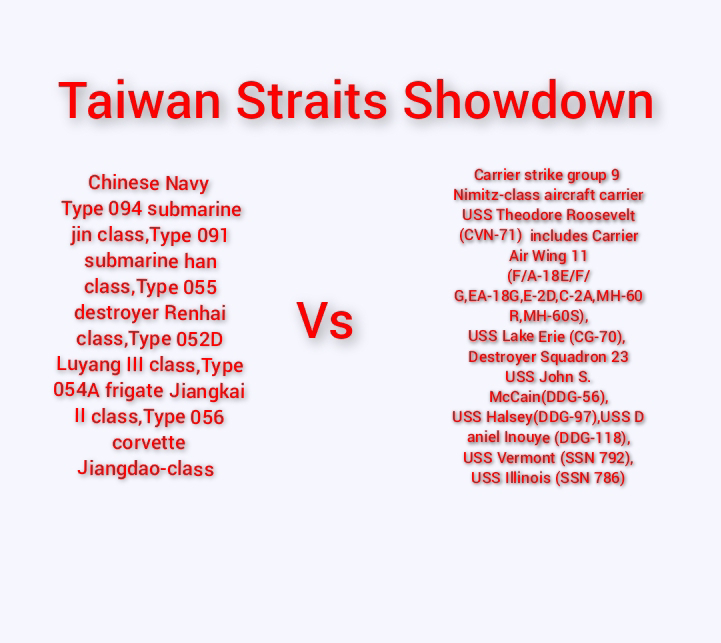
Taiwan Straits Showdown: US Carrier Strike Group 9 Confronts Chinese Naval Armada

Image
The Taiwan Straits, a strategically vital waterway, have been a flashpoint of tension and geopolitical contention for decades. In the midst of escalating regional rivalries, the emergence of a formidable confrontation between the United States' Carrier Strike Group 9 and the Chinese Naval Armada has underscored the complexities and challenges of contemporary maritime security. As the world closely monitors this high-stakes standoff, understanding the dynamics and implications of this confrontation is essential. Background  Carrier Strike Group 9 is tasked with ensuring freedom of navigation in the Taiwan Straits, deterring Chinese aggression, and providing support to Taiwan. The group comprises the Nimitz-class aircraft carrier USS Theodore Roosevelt (CVN-71) accompanied by Carrier Air Wing 11, which includes various aircraft such as F/A-18E/F/G, EA-18G, E-2D, C-2A, MH-60R, and MH-60S. Additionally, it includes the guided-missile cruiser USS Lake Erie (CG-70) and Destro...

PNS Ghazi:A Submarine's Journey to unknown demise

Image
PNS Ghazi (S-130), a submarine of the Pakistani Navy, holds a significant place in naval history due to its role in the Indo-Pakistani conflicts of the 1960s and 1970s. Commissioned originally as USS Diablo (SS-479) in the United States Navy, it was later acquired by Pakistan and renamed Ghazi. The submarine played a pivotal role in the Indo-Pakistani War of 1971, where it embarked on a mission with the primary objective of locating and sinking the Indian aircraft carrier INS Vikrant. However, its journey ended tragically, sparking debates and speculations about the circumstances of its sinking. This delves into the story of PNS Ghazi(S-130), exploring its significance in naval warfare and the mysteries surrounding its demise.  A. General characteristics 1. The Tench-class diesel-electric submarine boasted a displacement of 1,570 long tons (1,595 t) when surfaced, and 2,414 long tons (2,453 t) when submerged. 2. With a length of 311 feet 8 inches (95.00 m) and a beam of...