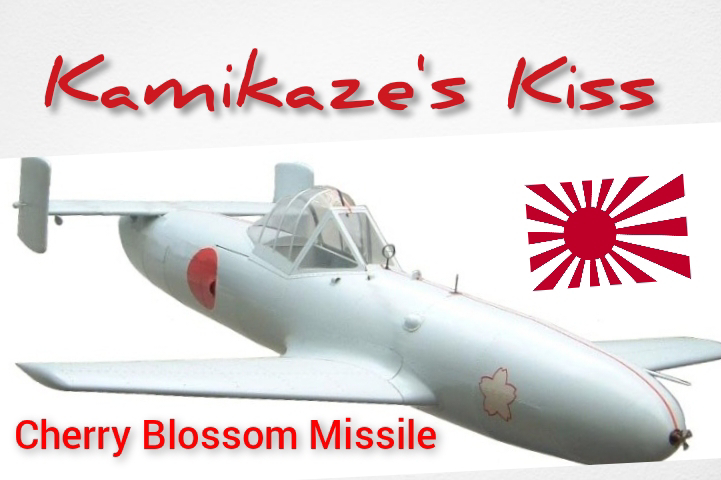
The Yokosuka MXY-7 Ohka, also known by its Japanese name "Oka" meaning "cherry blossom," was a grim innovation of World War II. This wasn't a conventional aircraft, but a pilot-controlled, rocket-powered missile designed for a single, suicidal attack. Faced with the relentless advance of Allied forces in the Pacific, the MXY-7 Ohka embodied the desperate measures Japan resorted to in the war's final throes.
A. Specification
Crew: 1
Length: 6.066 m (19 ft 11 in)
Wingspan: 5.12 m (16 ft 10 in)
Height: 1.16 m (3 ft 10 in)
Wing area: 6 m2 (65 sq ft)
Empty weight: 440 kg (970 lb)
Gross weight: 2,140 kg (4,718 lb)
Powerplant: 3 × Type 4 Mark 1 Model 20 solid-propellant rocket motors, 2.62 kN (588 lbf) thrust each
Maximum speed: 648 km/h (403 mph, 350 kn) at 3,500 m (11,500 ft)
Range: 37 km
B. Variants
1. Model 11: The only operational variant, powered by three solid-fuel rocket motors. (755 built)
2. Model 21: One prototype with steel wings built by Nakajima.
3. Model 22: Used a turbojet engine for increased range, with 50 built by the First Naval Air Technical Arsenal.
4. Model 33: Another jet-powered variant with a heavier warhead, designed to be carried by bombers.
5. Model 43: This family explored launching Ohkas from submarines (Model 43A) or caves (Model 43B) using catapults. Both had jet engines and folding wings.
6. Model 53: Designed for aerotow launch, again with a jet engine.
7. Ohka K-1: Unpowered gliders used for pilot training.
8. Model 43 K-1 Kai Wakazakura: Two-seat training glider with a single rocket motor for limited powered flight.
9. "Suzuka-24" (Japanese designation unknown): An alleged interceptor variant with a jet engine, fuel tank instead of a warhead, and autocannons. Its existence remains unconfirmed.
Above image: Yokosuka MXY7 Ohka Model 11, on display at Indian Air Force Museum, Palam, New Delhi, India
C. Guidance and Design:
The Ohka was a piloted, rocket-powered glider designed for a one-way kamikaze attack. It lacked landing gear and possessed only rudimentary flight controls. However, it boasted advanced carbon-based guidance technology, allowing the pilot to steer the aircraft towards the target with precision.
D. Development and Warhead:
Developed in 1944 as Allied forces closed in on Japan, the Ohka was a product of wartime desperation. It carried a massive 1,200 kg bomb with a hardened steel case and a gold-tipped warhead containing over 500 kg of explosives. The bomb itself accounted for most of the aircraft's weight. The warhead featured a unique detonation system. A spiral propeller on the nose served as an impact detonator, while four additional manual triggers were located at the tail for the pilot to use if necessary.
E. Propulsion and Launch Sequence:
The Ohka relied on three solid-propellant rocket engines mounted on the tail. Once ignited, these engines could not be shut down, highlighting the one-way nature of the mission. The launch sequence was chilling. The pilot would first power up the aircraft and request permission for launch from their superior. After confirmation, they would initiate the countdown and wait for the green light signaling launch.
Model 22 on static display at the Steven F. Udvar-Hazy Center of the National Air and Space Museum in Chantilly, Virginia,USA
F. Action and Impact:
Prior to launch, the Ohka was carried by a larger bomber aircraft, typically a Mitsubishi G4M2 "Betty." After detaching from its carrier, the Ohka would coast for a moment before igniting its final engine, achieving speeds exceeding 1,300 kilometers per hour. The pilot then steered the weapon towards a critical weak point on the enemy ship. Upon impact, the Ohka's detonation mechanism would trigger the colossal warhead, potentially crippling or sinking the targeted vessel. The gold-tipped bomb casing was designed to pierce the ship's hull, unleashing a devastating explosion within and delivering a fatal blow.
The Kamikaze's Kiss of the Cherry Blossom missile epitomized the brutal desperation of World War II. While later variants hinted at a more advanced design, the core concept of this weapon was horrifying – a piloted bomb hurling young men towards certain death. Despite limited effectiveness due to vulnerable carrier aircraft and Allied defenses, the Cherry Blossom's human cost was staggering. This weapon serves as a somber reminder of war's destructive power and the lengths nations will go to in the pursuit of victory.




Comments
Post a Comment